Quick Summary
Start with the direct answer on the home inspection contingency waive or not question: in Northern Virginia today, most buyers should keep the contingency, limit it, or replace it with a pre-offer inspection, and only waive it fully when the home is newer, the condition is already documented, and cash reserves can absorb a major surprise. Buyers in Fairfax, Vienna, and Arlington win competitive homes every month without giving up all protection, because the right middle path depends on the house, not on fear of losing it.
What does the contingency actually give you in Virginia?
Quick Summary: A home inspection contingency gives you a deadline to inspect, then negotiate repairs or void the contract in writing if the findings or the negotiation fail. Waiving it means condition problems become your cost after closing, and walking away for a condition reason can put your earnest money at risk. Virginia sellers make few representations about condition on the state disclosure, so your inspection is usually the only real look at the systems before you own them.
What does a Virginia inspection cover, and what does it miss?
What does the contingency actually give you in Virginia? Under the Northern Virginia Association of Realtors residential sales contract, your purchase is contingent on inspections only if the inspection addendum is attached. The addendum sets an inspection deadline, a negotiation period if you ask for repairs, and an election period if you cannot agree. Buyers choose the structure: a full contingency with the option to negotiate repairs or void, or a narrower right to void only. Either way, protection lives in the deadlines. Requests and notices must arrive in writing, on time, or the right expires.
When does waiving actually make sense?
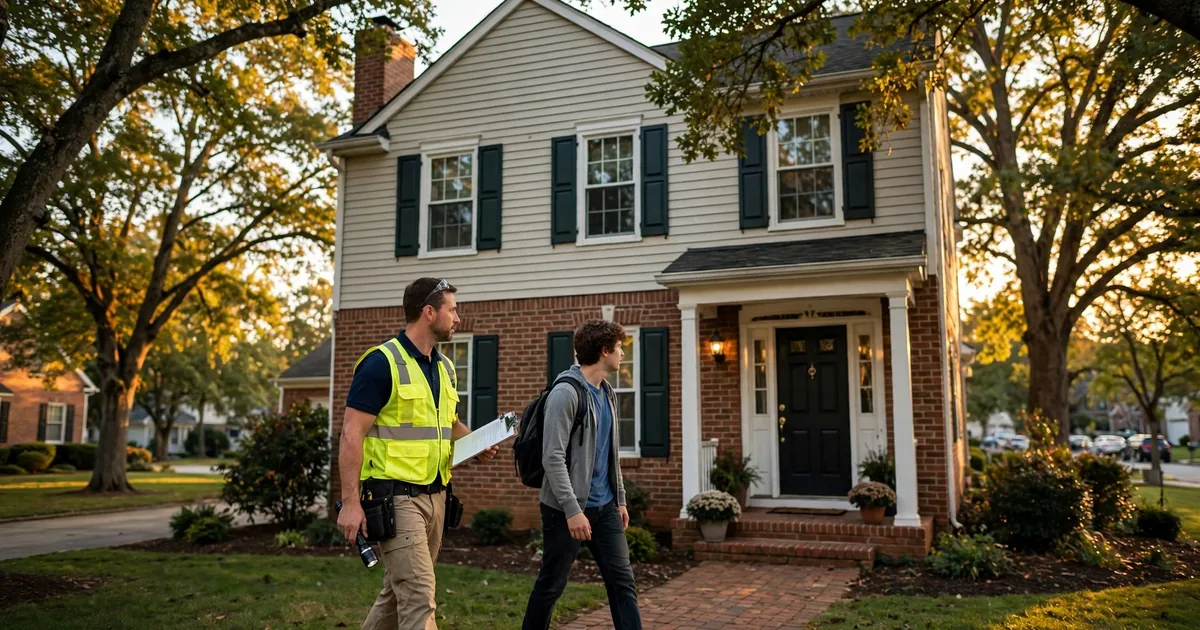
What does a Virginia inspection cover, and what does it miss? A licensed Virginia inspector reports on readily accessible parts of the home and readily observable defects: the structure and foundation, the roof and attic, the exterior, plumbing, electrical, heating, and cooling. Virginia Department of Professional and Occupational Regulation rules require the inspector to explain in the report if a crawl space or roof could not be inspected. An inspection is visual. It is not a code check, it is not pass or fail, and it cannot see inside walls. Radon, sewer scopes, well and septic work, and pest inspections are separate services you must add on purpose. New construction needs an inspector with the state specialty designation for new residential structures.
When should you never waive it?
When does waiving actually make sense? Waiving can be reasonable on a newer home with documented system ages, a seller pre-listing inspection report from a licensed inspector that you can verify, or a home you already inspected before writing the offer. It can also fit an investor or a buyer with a trusted contractor, deep cash reserves, and a price that already reflects the work. Market context supports patience: NVAR reported 3,477 active listings in September 2026, up 30.7 percent year over year, a median sold price of $744,950, and an average of 28 days on market, per Bright MLS data released October 12, 2026. A full waiver is now a per home decision, not a default ticket to compete.
What are the middle paths that win without a full waiver?
When should you never waive it? Keep the contingency on an older home with an aging roof or heating and cooling system, any home with a basement or crawl space you have not seen dry, a flipped home where cosmetic work can hide system work, and any purchase that would empty your savings at closing. Virginia follows buyer beware in practice: the state disclosure form tells buyers that the seller makes no representations about many property conditions and that buyers should do their own due diligence. A seller may not deliberately conceal a known defect, but proving that after closing is slow and expensive. If one surprise repair would strain you, the contingency is your budget protection, not a bargaining chip.
What this means for values
What are the middle paths that win without a full waiver? First, choose right to void only: you promise no repair requests, but you keep a written exit if the report finds a major problem. Second, do a pre-offer inspection before the offer deadline on homes with a long review window, so you write with facts already in hand. Third, keep the contingency but shorten the inspection period and limit repair asks in writing to major systems and safety items, not cosmetics. Fourth, if you waive the contingency, negotiate inspection access for information only into the contract itself. The NVAR contract is blunt: if the contract is not contingent and the access box is not checked, the seller does not have to admit your inspector at all, apart from the final walkthrough.
FAQs
What this means for values: In our Cornerstone work across Northern Virginia, the buyers who regret inspection choices are rarely the ones who kept a short, clean contingency. They are the ones who waived everything on an older home to beat one competing offer, then met the real house in month two. A focused contingency with a fast deadline signals a serious buyer to a seller. It costs the seller a few days, not an open ended repair negotiation, and it protects the largest check most buyers will ever write.
Buying in Northern Virginia and weighing how much inspection protection your offer can carry? Start by seeing what is actually competing for your budget: search current homes on our site, compare the ages and system clues in each listing, then text (571) 441-1031 for a five minute call before the offer deadline. We will map a keep, limit, or waive plan for that specific home, with deadlines you can meet.
Sources: Northern Virginia Association of Realtors, Residential Sales Contract and Home Inspection and Radon Testing Contingency Addendum (contingency and inspector access terms); Virginia Department of Professional and Occupational Regulation, home inspector regulations (readily accessible components and observable defects, new construction specialty); NVAR, September 2026 statistics via Bright MLS, released October 12, 2026; Keri Shull Team, Arlington inspection guide, 2026 ($450 to $650, add ons $150 to $300); NextDay Inspect, radon testing (48 hour monitor, $175 add on). Educational content only, not legal advice. Your ratified contract controls.
FAQ
If I waive the contingency, can I still get an inspection?
Only if your contract gives you access in writing. Without that agreement, the seller does not have to let an inspector in, apart from your final walkthrough. Arrange information only access in the contract, or inspect before you offer.
Does waiving the contingency put my earnest money at risk?
Yes, if you later walk away over condition. With no inspection contingency, leaving over a roof or foundation finding is usually a default, not a protected void, unless another contingency in your contract covers it.
How much does an inspection cost, and how long does it take?
Local Arlington guidance puts a standard inspection at $450 to $650, with specialty work such as radon adding $150 to $300. Most inspections take two to four hours. A radon monitor stays at least 48 hours, so order it on day one.
Is the lender appraisal the same as a home inspection?
No. An appraisal estimates value for the lender and may flag obvious safety issues. It does not test systems or report on condition the way a licensed inspector does.