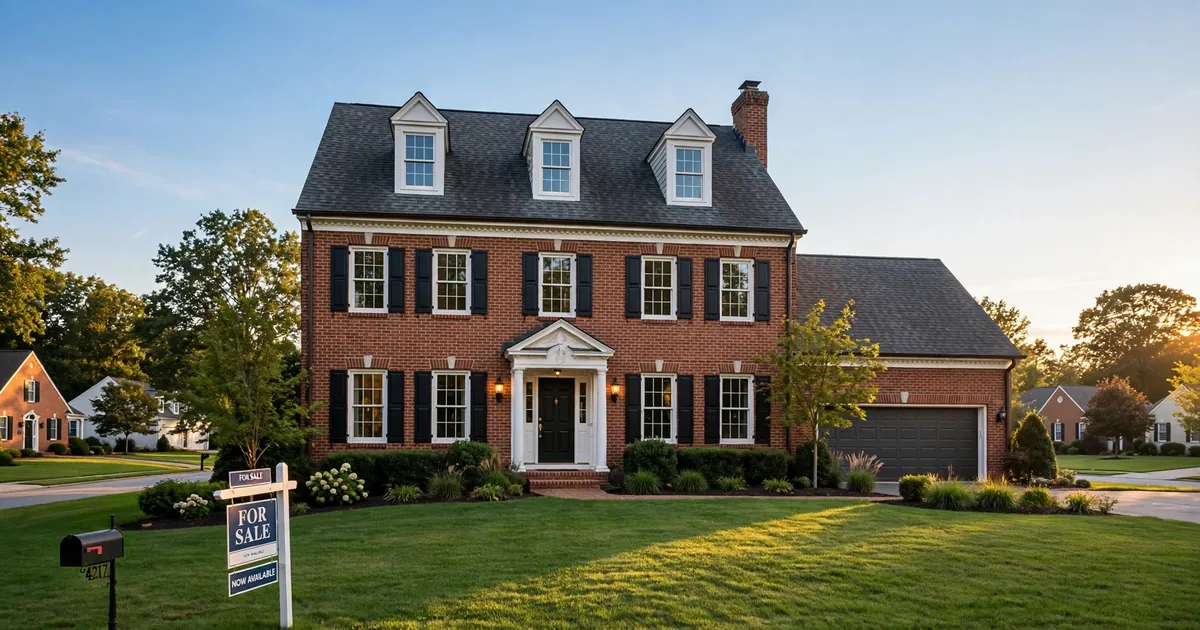
Quick Summary
Yes. A bridge loan in Virginia lets you borrow against the equity in your current home so you can buy your next home before the old one sells. It is a short-term loan, usually 6 to 12 months, secured by your existing home. You typically make interest-only payments, then repay the full principal when your current home closes. In 2026, bridge loan rates for real estate generally run about 8% to 14% with 1.5 to 3 points in origination fees, at 65% to 80% loan-to-value (HardMoneyHome.com 2026 guide). Lenders commonly advance up to about 80% of your current home's equity. The trade: you pay a premium rate for a short window so your offer does not need a home-sale contingency, which matters when sellers choose among offers.
How a bridge loan works in Virginia
Here is how it works in Virginia. First, the lender appraises your current home and calculates your equity: value minus what you owe. Second, the lender advances a portion of that equity, often up to 80%, either as a second lien or as one cross-collateralized loan covering both properties. Third, you close on the new purchase using the bridge funds as the down payment or, in some cases, the full price. Fourth, you carry both properties through the overlap, making interest-only bridge payments plus your regular mortgage. Fifth, when your current home settles, the bridge is repaid in full from the proceeds. Capital Funding's 2026 guide names the two common structures: an equity-extraction advance paired with a separate new mortgage, or a blended package rolling both into one loan. Timing note: federal TRID rules impose mandatory waiting periods on owner-occupied loans, so even a fast bridge on a primary residence cannot close in under about two weeks.
What a bridge loan costs in 2026
Three numbers matter: rate, points, and time. Bridge rates in 2026 run roughly 8% to 14% depending on lender type, credit, and equity, versus about 7.03% for a standard 30-year fixed (Freddie Mac weekly average, week of September 24, 2026). Traditional lenders sit at the lower end with stricter requirements; private lenders approve faster and charge more. Origination fees typically run 1.5 to 3 points, plus a few thousand in closing costs (HardMoneyHome.com 2026 guide). Time is the number sellers underestimate, because interest accrues only for the days you hold the loan. Illustrative: a $200,000 bridge at 10% held 90 days costs about $4,932 in interest (200,000 x 0.10 x 90/365), plus the points. If your Vienna home sells in three weeks instead of three months, the interest bill is a fraction of that.
Who benefits most in Northern Virginia
Who benefits most in Northern Virginia right now? Three situations. First, the seller who found the next home before listing the current one. The August 2026 NoVA market showed about 21 median days on market and 2.13 months of supply (NVAR, Bright MLS): homes sell, but not overnight. Second, the seller with deep equity and strong income. A $900,000 Arlington home with $400,000 of equity supports a bridge advance of roughly $320,000, enough for 20% down on a $1.2 million-plus purchase, while debt-to-income still qualifies carrying both mortgages. Third, the seller avoiding two moves: a bridge can cost less than selling first, renting, storing furniture, and moving twice. The common thread: real equity, income to carry two payments, and a current home priced to sell within the bridge term.
The real risks (and how sellers manage them)
Treat the risks as a checklist. The biggest is carrying costs if your sale stalls. A bridge ends with a balloon payment: full principal due when the term ends or the home sells, whichever comes first. If your Alexandria townhome sits because you priced it for last year's market, you face an extension, a refinance at worse terms, or a price cut. Mitigation: price for speed and keep reserves covering six months of both payments. Second, appraisal shortfalls: the lender's appraisal, not your asking price, sets the advance. Mitigation: get a broker price opinion before you apply. Third, qualification: lenders underwrite the bridge assuming you carry both mortgages. Mitigation: run the full debt-to-income picture with your lender before you shop. Fourth, the rate premium itself. Mitigation: align the two closings tightly, and consider a rent-back on your sale to buy shopping time without the bridge running.
Bridge loan vs. the alternatives
A bridge is not the only way to buy before you sell. A home-sale contingency (NVAR form K1342) makes your purchase contingent on your current home selling. It costs nothing but weakens your offer; sellers weighing multiple offers routinely prefer non-contingent ones. A HELOC can fund the down payment at a lower rate, but qualifying takes weeks and the line typically closes when you sell. A rent-back lets you close your sale and rent your own home back for 30 to 60 days while you shop, which can eliminate the bridge entirely. A mortgage recast is the quiet winner for some sellers: buy with a smaller down payment, then apply the sale proceeds as a lump sum and have the lender recalculate the payment, keeping the original rate and term. The right choice depends on your equity, timeline, and target neighborhood.
Your seller's checklist before you borrow
Your checklist before you borrow. First, know your number: get a home valuation on your current home so you borrow against real equity, not a guess. Second, get fully underwritten for both mortgages, not just pre-qualified. Third, confirm the math in writing: loan amount, rate, points, term, the interest-only payment, and exactly what triggers the balloon payoff. Fourth, price your current home to sell within the term; in a 21-days-on-market region like NoVA, a sharp day-one price is the cheapest insurance a bridge borrower can buy. Fifth, align closings and build a plan B: a rent-back, an extension option, or reserves for six months of double payments. Get those five right and a bridge loan does exactly what its name promises. Thinking about selling and buying in the same move? Start with a free home valuation at cornerstonedmv.com/valuation, or text (571) 441-1031 and our team will walk through the bridge math for your situation.
FAQ
How long do bridge loans last in Virginia?
Typically 6 to 12 months, occasionally up to 18. Most are interest-only with the full principal due when your current home sells or the term ends, whichever comes first. Federal TRID rules impose mandatory waiting periods, so an owner-occupied bridge cannot close in under about two weeks even with a fast lender.
How much can I borrow with a bridge loan?
Lenders commonly advance up to about 80% of your current home's equity, at 65% to 80% combined loan-to-value. The advance is based on the lender's appraisal, not your asking price. Example: $300,000 of equity supports roughly a $240,000 bridge advance at 80%.
Is a bridge loan better than a home-sale contingency?
It depends on competition. A bridge costs more (roughly 8% to 14% in 2026 plus 1.5 to 3 points) but lets you make a non-contingent offer, which sellers strongly prefer. A contingency costs nothing but weakens your offer. In competitive NoVA neighborhoods the bridge often wins; where homes sit longer, the contingency is cheaper.
Can I get a bridge loan on a condo or townhome in Northern Virginia?
Yes. Lenders bridge condos, townhomes, and single-family homes alike, and suburban NoVA is mostly that housing stock. One extra check for condos: confirm the building meets the lender's warrantability standards early, since condo project approval can slow any mortgage, bridge or otherwise.