What Radon Is
Radon is a colorless and odorless gas that comes from uranium decay in soil and rock. It is common in Northern Virginia granite and shale. It is measured in picocuries per liter. You cannot smell it and you cannot see it. The only way to know your level is to test.
What the County Data Says
Both counties have meaningful rates above the EPA action level. Fairfax County averages about 3.1 picocuries with about 24 percent of tests at or above 4.0 across about 23,000 tests. Loudoun County averages about 4.1 picocuries with about 31 percent at or above 4.0 across about 4,600 tests. Virginia Department of Health notes Loudoun should be considered high risk even though the older EPA map shows it as moderate. The EPA map from 1993 was based on limited tests and geology and was not meant to predict a single home.
How to Test Right
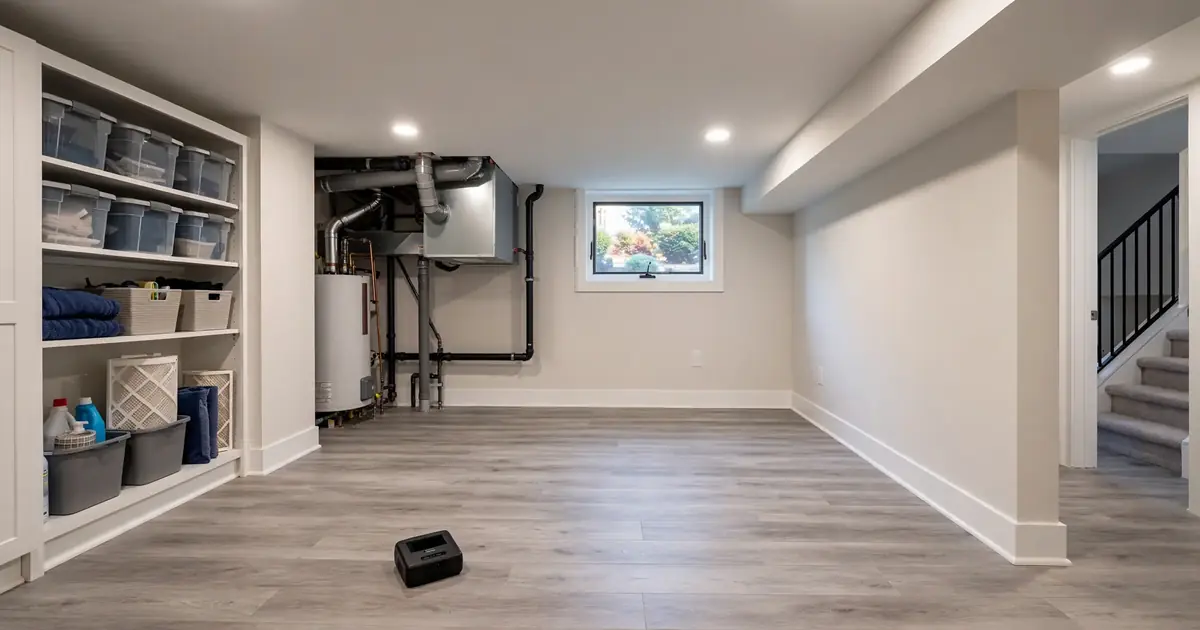
Test the lowest livable level that is finished or could be finished. In Ashburn, Sterling, Leesburg, Fairfax, and Burke that is often a basement family room or bedroom. Place the device at least 20 inches off the floor in the breathing zone, away from outside walls, sump pits, bathrooms, and laundry. Keep windows closed for 12 hours before and during the test. Run at least 48 hours. Do not test during a severe storm with heavy rain and low pressure.
Mitigation and Cost
For a real estate transaction, use a continuous radon monitor that logs hourly readings or the average of two short term tests, or one long term 91-day test. A professional test is typically 100 to 200 dollars. The Virginia Department of Health also offers low cost kits. Digital plug in monitors are useful after mitigation but are not approved for a transaction.
What It Means for a Sale
If the result is at or above 4.0, EPA recommends mitigation. If it is 2.0 to 3.9, consider mitigation. Mitigation is usually a sub slab pipe and fan that pulls gas from below the foundation before it enters. Typical cost is 800 to 1,200 dollars for a single foundation type. Virginia requires radon pros to be certified by NRPP or NRSB.
Virginia does not require radon testing or mitigation before a sale. It is negotiable. For sellers, a clean pre listing test with a closed house log can prevent a day 10 renegotiation. For buyers, order radon with the home inspection and budget mitigation if needed. Search live Ashburn homes, Sterling homes, and Leesburg homes in the Cities We Serve hub for basement inventory.
Sources & Data: Virginia Department of Health Indoor Radon Program, EPA Map of Radon Zones with disclaimer, USGS Map of Radon Potential in Fairfax County MF2047, VDH Real Estate Transactions table 1990-2017 and 2016-2024 tracking. Levels vary by home and season. Test your own home.
Text Cornerstone Realty Group at (571) 441-1031 for a 5-minute radon test referral and a mitigation contact in Loudoun and Fairfax.
FAQ
What is radon and why is it a Northern Virginia issue?
Radon is a colorless and odorless gas that comes from uranium decay in soil and rock. It is common in Northern Virginia granite and shale. It is measured in picocuries per liter. You cannot smell it and you cannot see it. The only way to know your level is to test.
How do Loudoun and Fairfax compare?
Fairfax County averages about 3.1 picocuries with about 24 percent of tests at or above 4.0 across about 23,000 tests. Loudoun County averages about 4.1 picocuries with about 31 percent at or above 4.0 across about 4,600 tests. Virginia Department of Health notes Loudoun should be considered high risk even though the older EPA map shows it as moderate. The EPA map from 1993 was based on limited tests and geology and was not meant to predict a single home.
How do I test for radon correctly?
Test the lowest livable level that is finished or could be finished. In Ashburn, Sterling, Leesburg, Fairfax, and Burke that is often a basement family room or bedroom. Place the device at least 20 inches off the floor in the breathing zone, away from outside walls, sump pits, bathrooms, and laundry. Keep windows closed for 12 hours before and during the test. Run at least 48 hours. Do not test during a severe storm with heavy rain and low pressure.
What counts as a transaction-grade radon test?
For a real estate transaction, use a continuous radon monitor that logs hourly readings or the average of two short term tests, or one long term 91-day test. A professional test is typically 100 to 200 dollars. The Virginia Department of Health also offers low cost kits. Digital plug in monitors are useful after mitigation but are not approved for a transaction.
My result is at or above 4.0: what now?
If the result is at or above 4.0, EPA recommends mitigation. If it is 2.0 to 3.9, consider mitigation. Mitigation is usually a sub slab pipe and fan that pulls gas from below the foundation before it enters. Typical cost is 800 to 1,200 dollars for a single foundation type. Virginia requires radon pros to be certified by NRPP or NRSB.
Is radon testing required in Virginia before a sale?
Virginia does not require radon testing or mitigation before a sale. It is negotiable. For sellers, a clean pre listing test with a closed house log can prevent a day 10 renegotiation. For buyers, order radon with the home inspection and budget mitigation if needed.