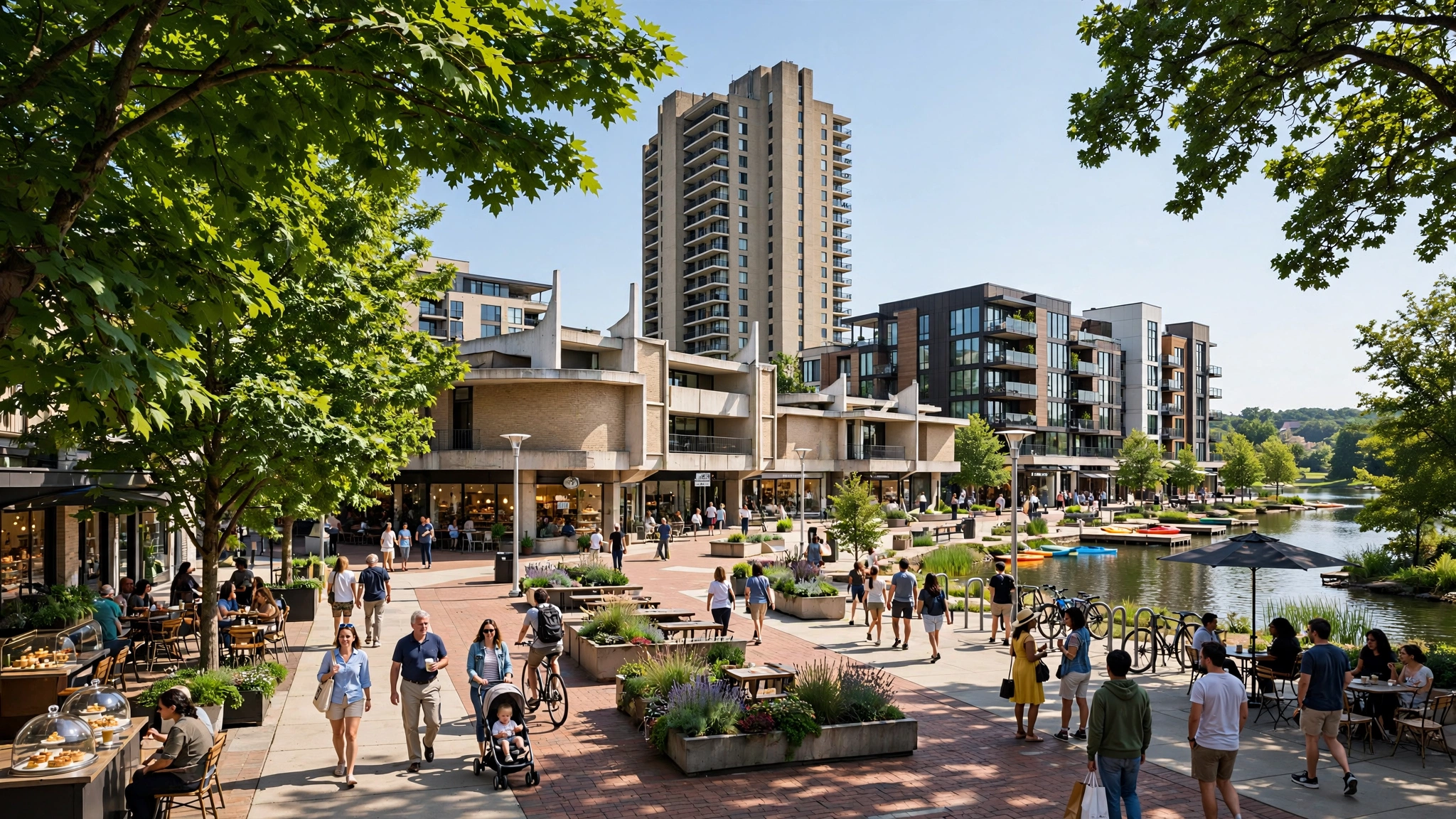
Why Reston Walks Differently
A common trade in Fairfax in 2026: a larger home in Clifton versus ninety minutes daily driving across Route 28. Reston villages fix that math for many commuters. If you can walk to Metro, grocery, and trail, the second car sits.
Lake Anne vs Town Center: Porch Life vs Evening Density
Reston Town Center core reads high walkability with late retail and restaurant density. Lake Anne Village Center trades late-night for porch life, lake path, and village shops you can bike to. South Lakes village shops sit in between with grocery and community center access. All three connect to the W&OD Trail, which changes daily use more than any single shop.
W&OD Trail and Silver Line: What Actually Connects
Lake Anne gives you lake path, village shops, and a bikeable errand loop. Town Center gives you true evening density. Shops open past nine indicate real commuter life, not just Saturday traffic. Which holds value depends on commute. Silver Line Wiehle-Reston East to Tysons is a short rail ride, to downtown longer, with headway-driven timing. Check WMATA current schedules rather than a fixed-minute promise.
One Car vs Two: The Household Math That Matters
Household math is where walkability pencils. If you can drop to one car, you save payment, insurance, parking, and gas. That savings often offsets a modest walkable premium within a few years, before faster resale. Condition still decides days on market. Updated kitchen, storage, and main-level primary matter more than a Walk Score point.
How to Test a Block Before You Buy
If you buy for walkability and live three hundred sixty four days after, test the walk on a Tuesday. Can you get coffee, hit the W&OD, and make Metro before eight without moving the car. If yes, Reston villages hold value for reasons smaller lots do not.
Explore Reston Homes — See Walkable Village Inventory